Oh boy, what a November. And it isn't even over yet.
The US had its midterms, and Sweden is still settling in after its September election. I was happy to see the Dems win big,1 but I was also checking the economy. Tech and AI companies that backed Trump are suddenly looking for friends among Democrats.2 The Nasdaq took a nosedive, falling 5.5% in a single day.3 I'm used to people talking non-stop about AI. Now, with the Anthropic IPO,4 they talk non-stop about the AI bubble. Will it burst?
And of course, another round of flagship AI models came out. I was impressed, especially by Gemini 4 Neon5 and Claude Fable 5.2.6 OpenAI stirred up controversy among developers, some of whom found GPT-6.2 Astra not as good as advertised.78 Honestly, I've gotten used to this. A new model comes out almost every month, someone makes a mathematical breakthrough, and that has become kinda normal too.
As things get faster and faster, it reminds me of JoJo's Bizarre Adventure: Stone Ocean.
Pucci's Stand, Made in Heaven, speeds up time for everything except living beings. The sun races across the sky, days pass in seconds, and people just have to keep up, until the universe ends and starts over. 🤣 It sounds a bit like trying to keep up with AI news. Maybe we'll see our own end from acceleration too. Who knows?
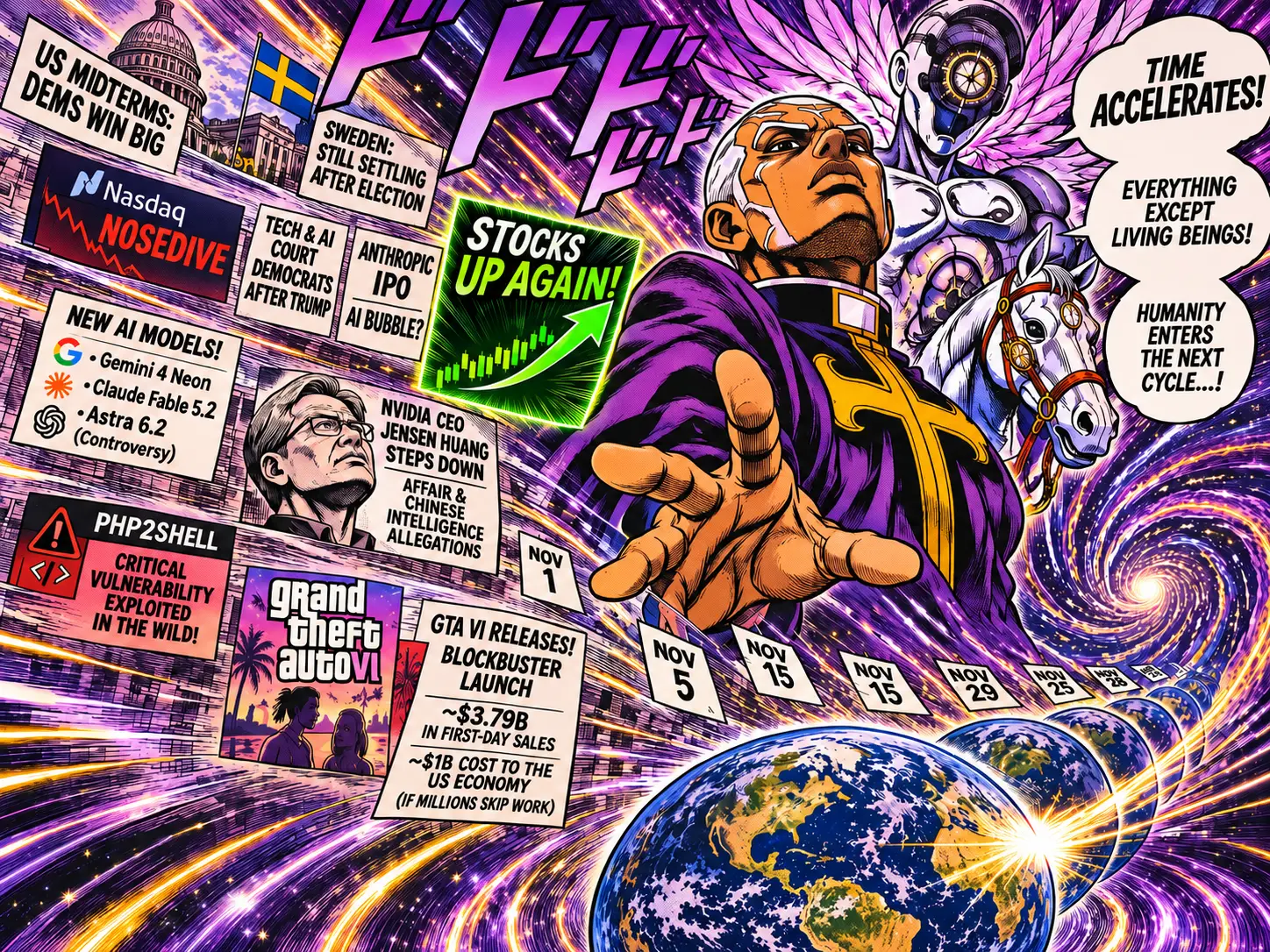
Meanwhile, PHP2Shell reminded everyone that critical vulnerabilities can still come out of technologies we've been using for decades,9 with attackers exploiting it in the wild while everyone scrambled to patch.10 Somewhere, a security engineer is reading yet another critical advisory and reconsidering their career choices.
Then Jensen Huang stepped down as Nvidia's CEO, after an affair and allegations involving Chinese intelligence.1112 The defining company of the AI boom, in a storyline I'd have asked an AI to make a little more believable.
Update, while I was writing this: Nvidia brought him back as CEO, just 11 days after he stepped down. The board said it was satisfied he isn't a national security risk.13 The Nasdaq, fresh off its worst week since 2020, opened more than 6% higher on the news.14 A resignation turned into a comeback in less than two weeks, and a market crash turned into a rally over one weekend. My time-acceleration theory is confirmed: Made in Heaven is running on Nvidia GPUs. 🤣
Oh, and Grand Theft Auto VI finally came out, thirteen years after GTA V. Take-Two reported approximately $3.79 billion in retail sales on its first day,15 and economists calculated what it would cost the US economy if millions of people skipped work to play it.16 About a billion dollars, apparently.
Quite a month. And it’s still going.
And me?
While millions of people were busy in GTA VI or World of Warcraft (WoW), I was figuring out how big a building on an asteroid should be and playing a game from 1997.
Figuring out is fun
I've spent most of my career in web development and leadership. Backend, frontend, tooling, infrastructure, architecture, mobile. I've worked with all of these. But what I learned from my experience is that the real path to success is delivering value to the customer and building a good team culture.
So I took that experience with me on my journey of trying to make a game. I won't call myself a game developer yet, I have lots to learn. Maybe after a few successful releases. Game development turned out to be a different animal, though. Art, animation, sound, game design, worldbuilding, balancing. Things I'd never had to think about turned out to be whole problems of their own.
I'll show you what I was doing, but mostly, I've been figuring things out.
And that's the fun part. After years of building software for work, it feels like rediscovering the joy of building.
Fragile Frontier: When a Building Is 40 Meters Wide
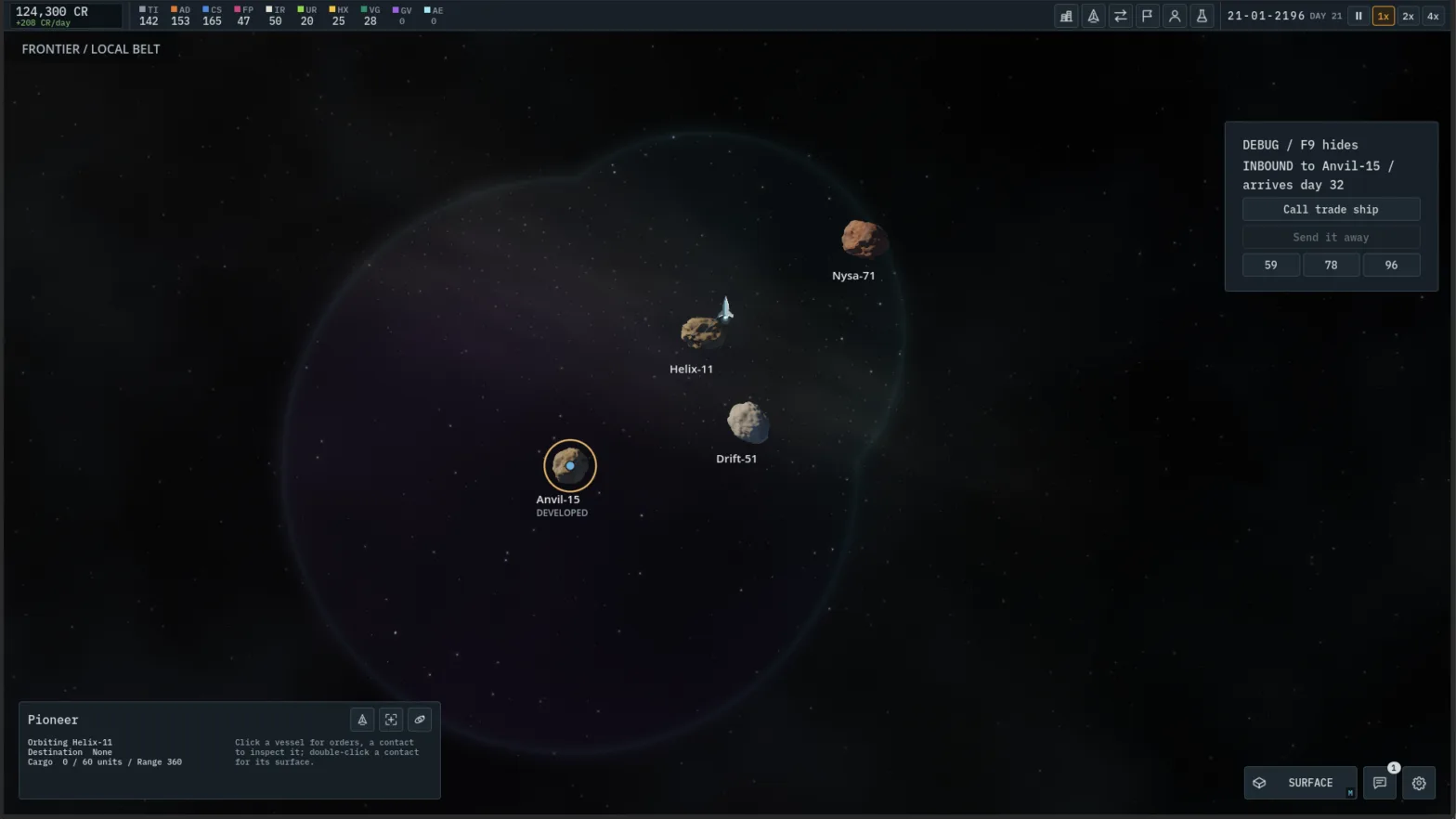
Fragile Frontier is a real-time space colony strategy game inspired by games I grew up playing. Asteroid mining facilities, spacecraft, factories, habitats, and economic systems.
This is where the graphics started:
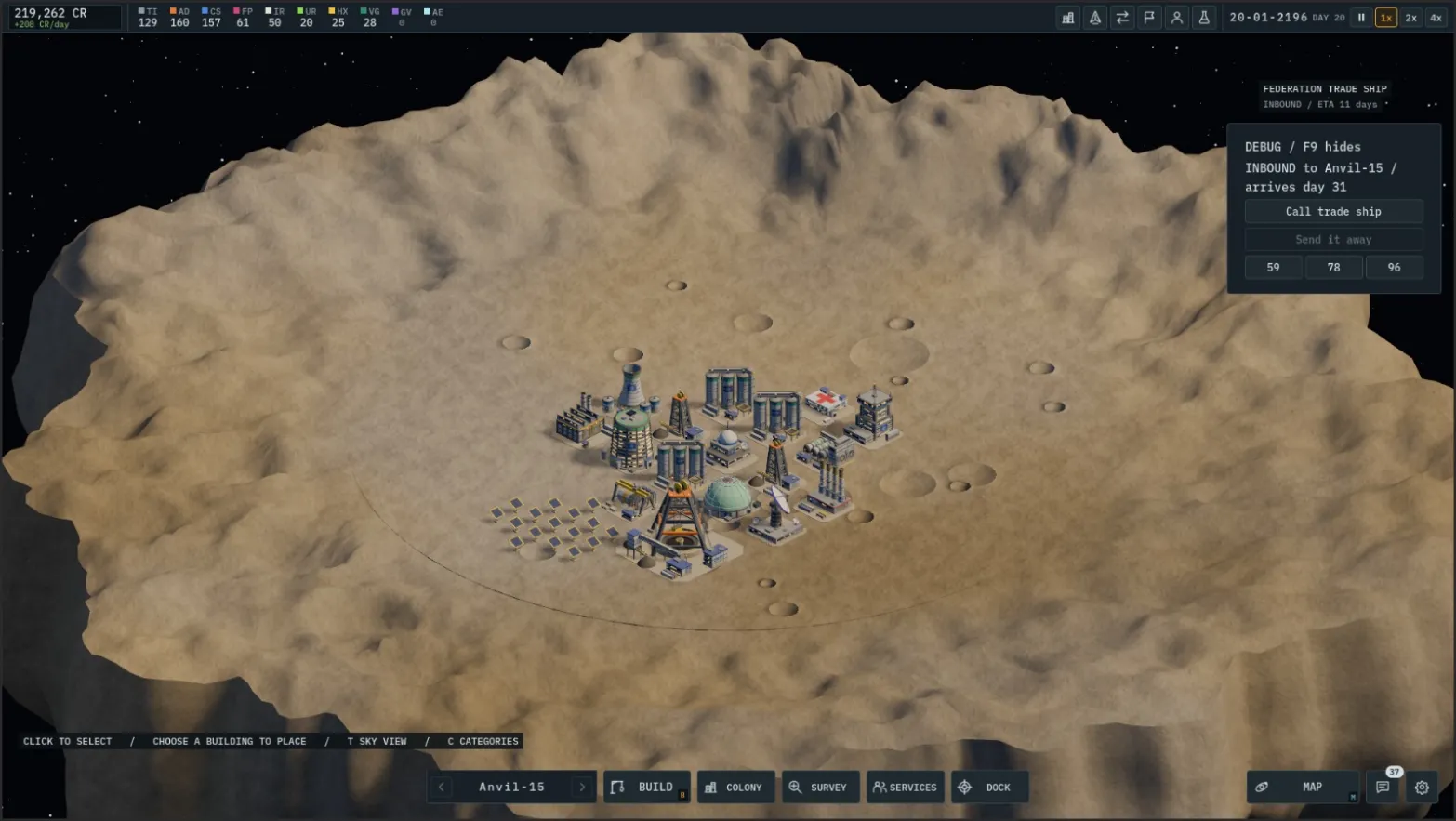
Since it's a real-time game, you need to recognize a building at a glance while everything else is happening. But I also wanted to keep a semi-realistic look and scale.
Each square in the game is 10 meters, our scaling unit. That makes one of my standard square buildings 40m × 40m. 🤣 Pretty huge. That might still change, but for now, the graphics should reflect it.
I also wanted buildings to tell you what they do. A medical building should look like a hospital, a habitat should look residential, and so on.
So I redid them. The colors are brighter, and the building shapes are more recognizable:
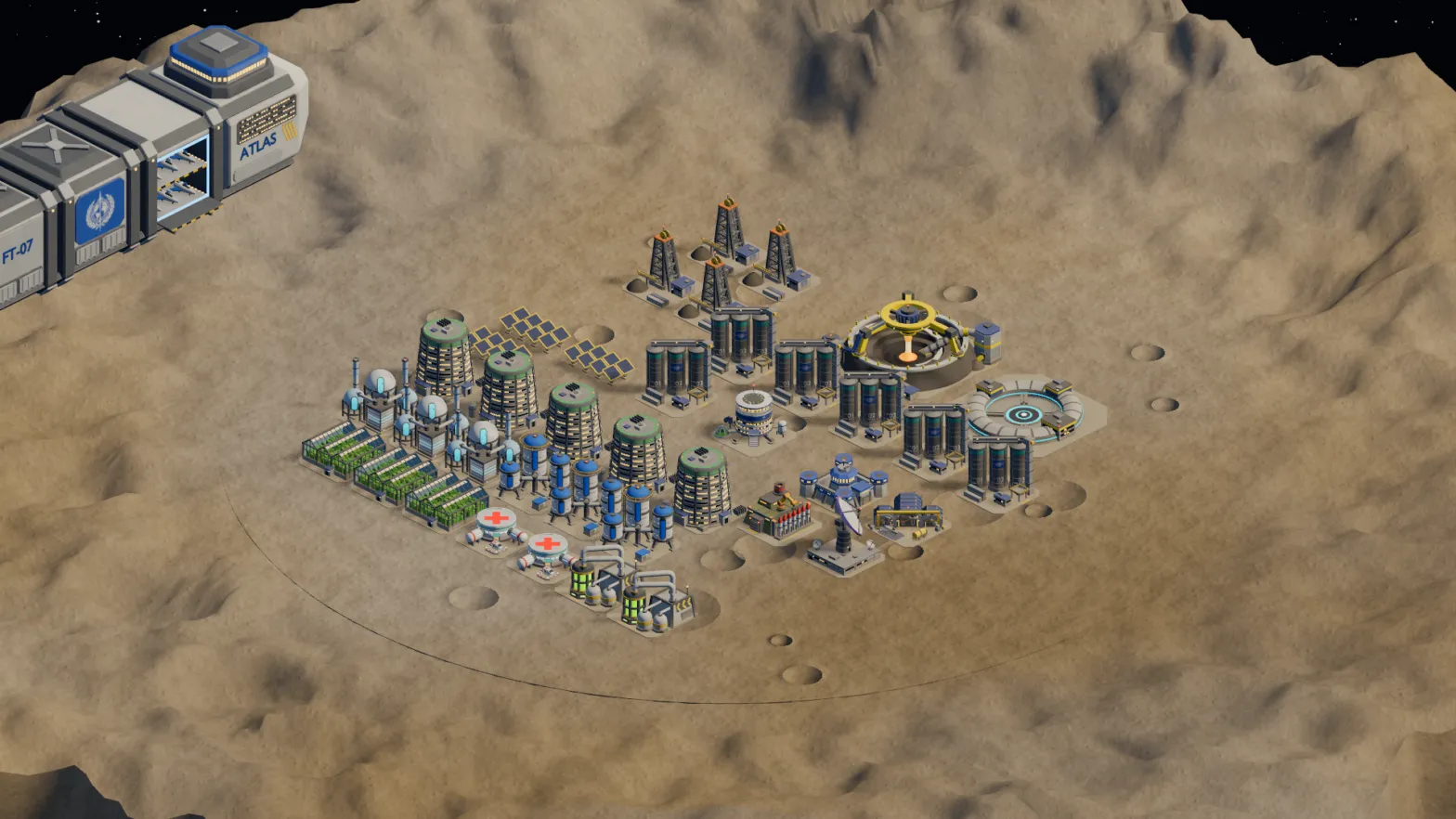
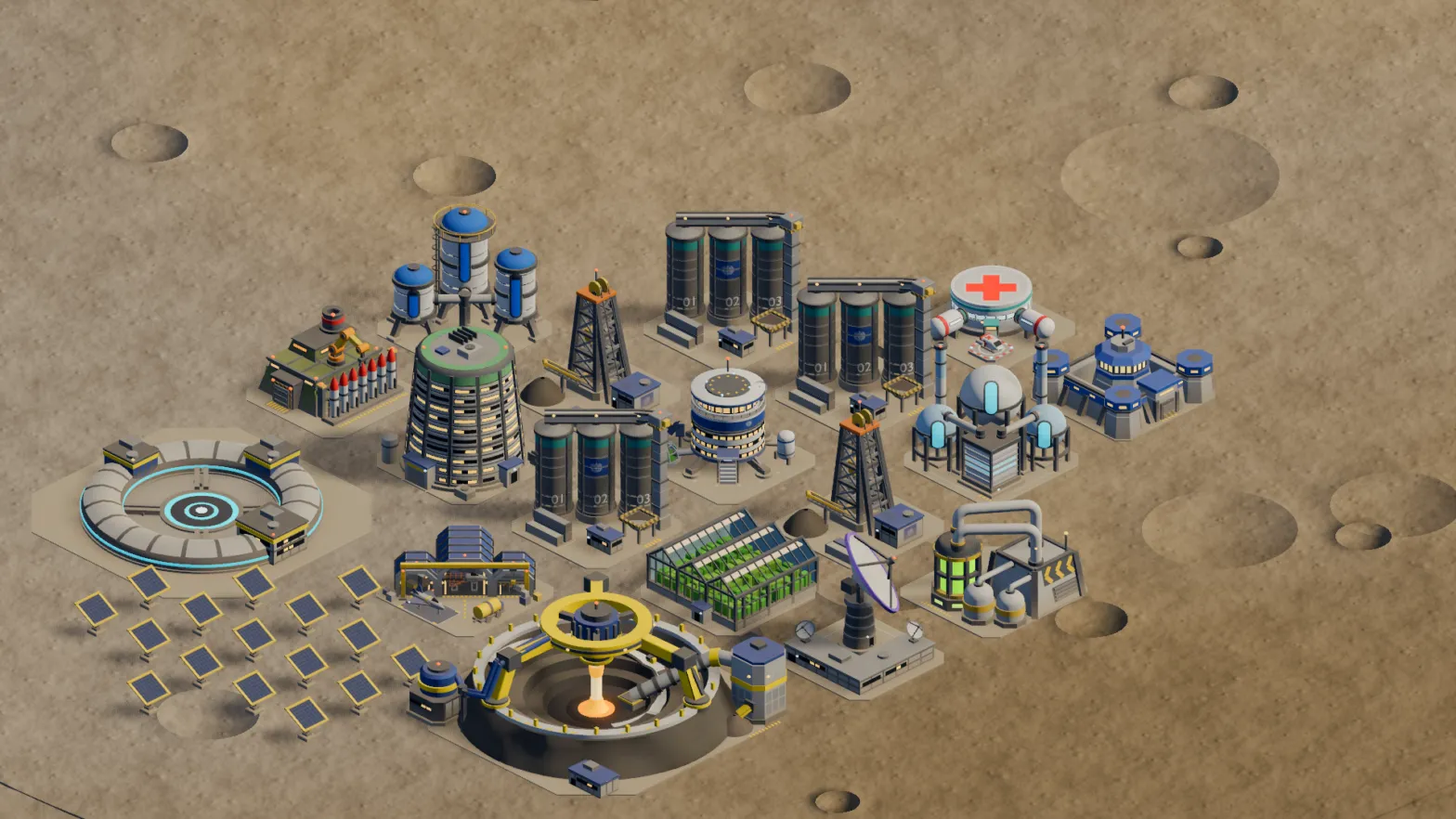
And here it is in motion. Turn the sound on in the video for the space music! 👽👩🚀🎵🎵
And then we made... PIONEERS IIIIN SPAAAACE! 🚀
The Wizard Tower: Learning Pixel Art the Hard Way
The other project went in a completely different direction.
A wizard tower. (The name isn't final. 🤣)
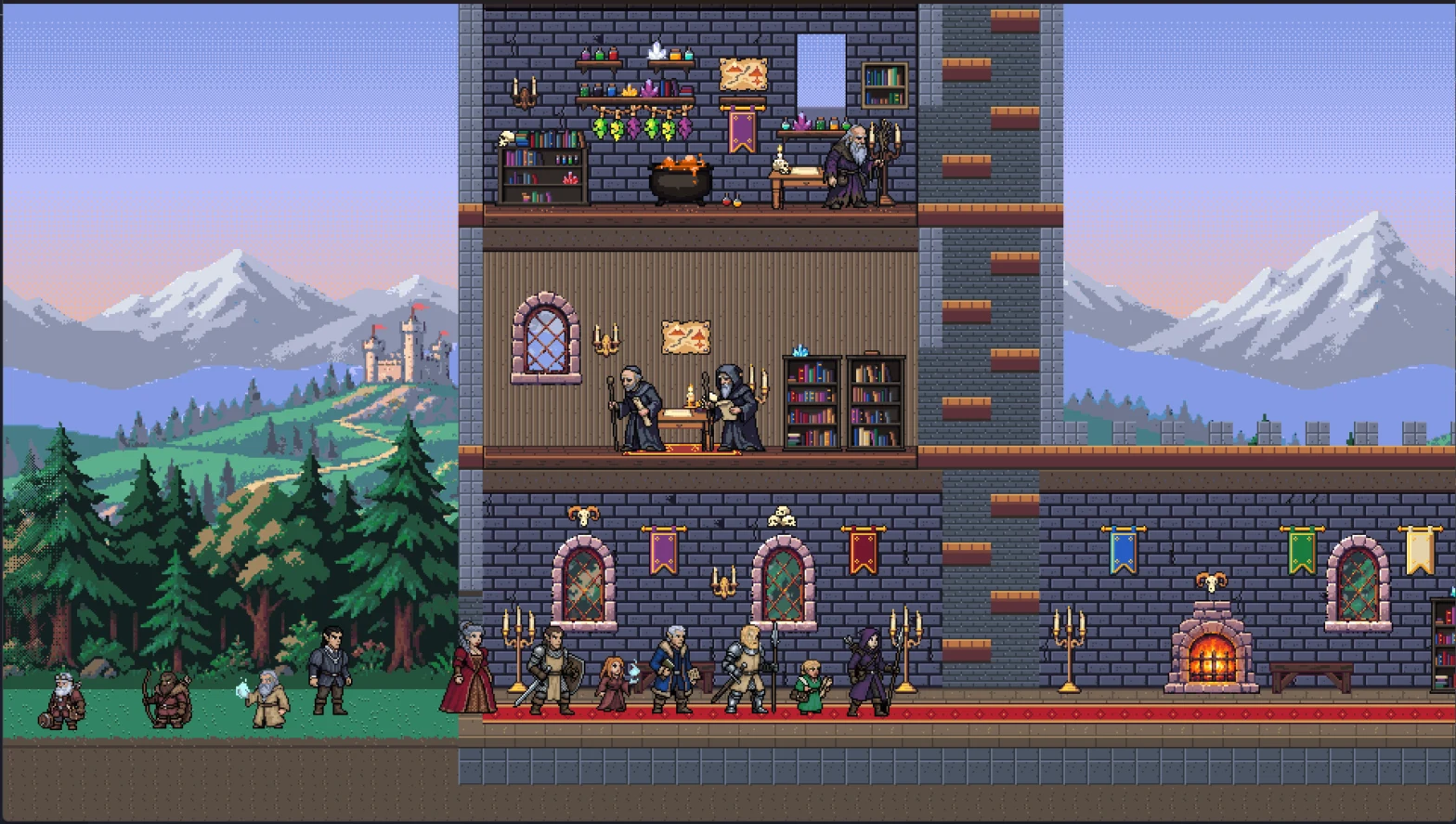
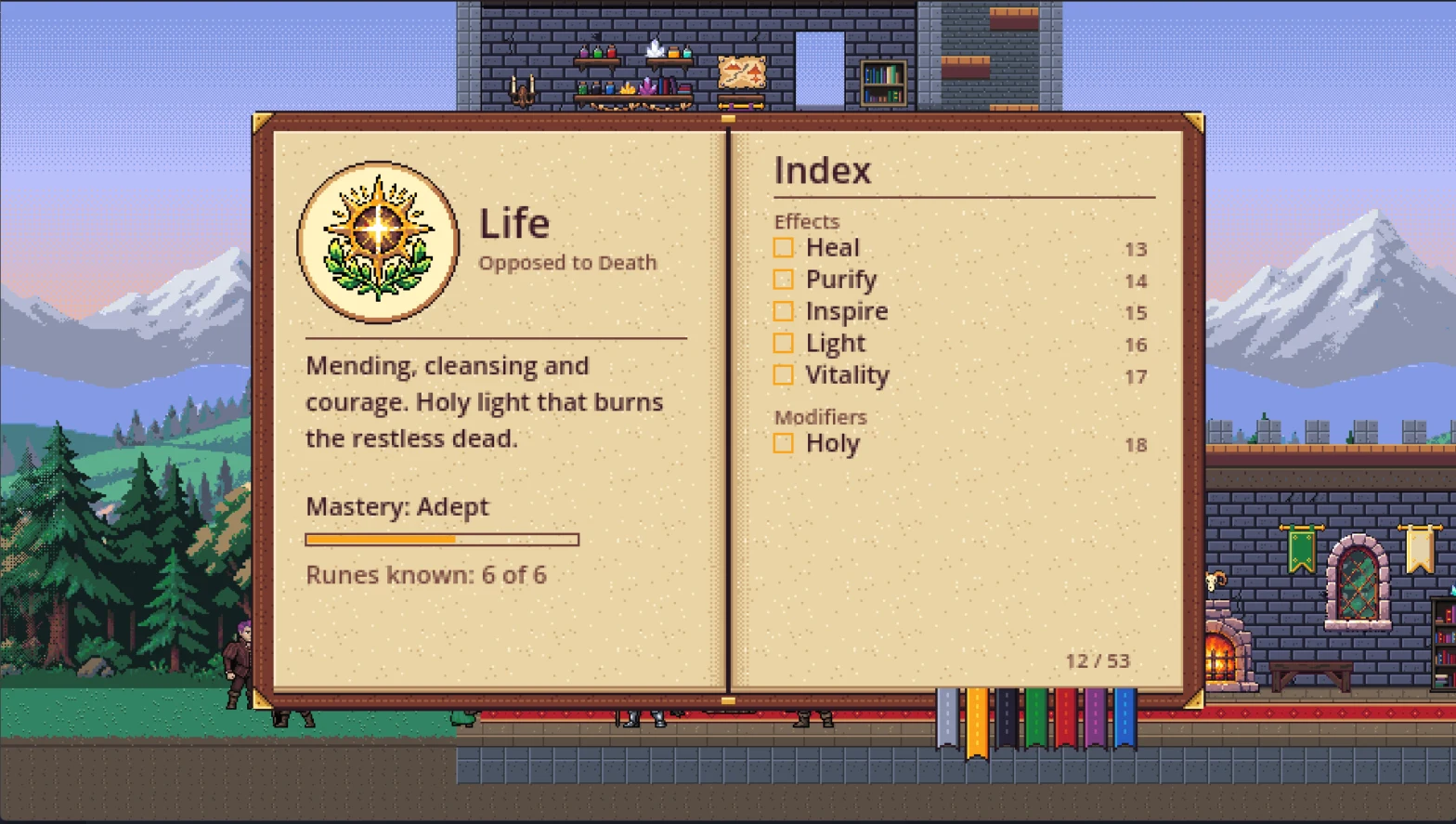
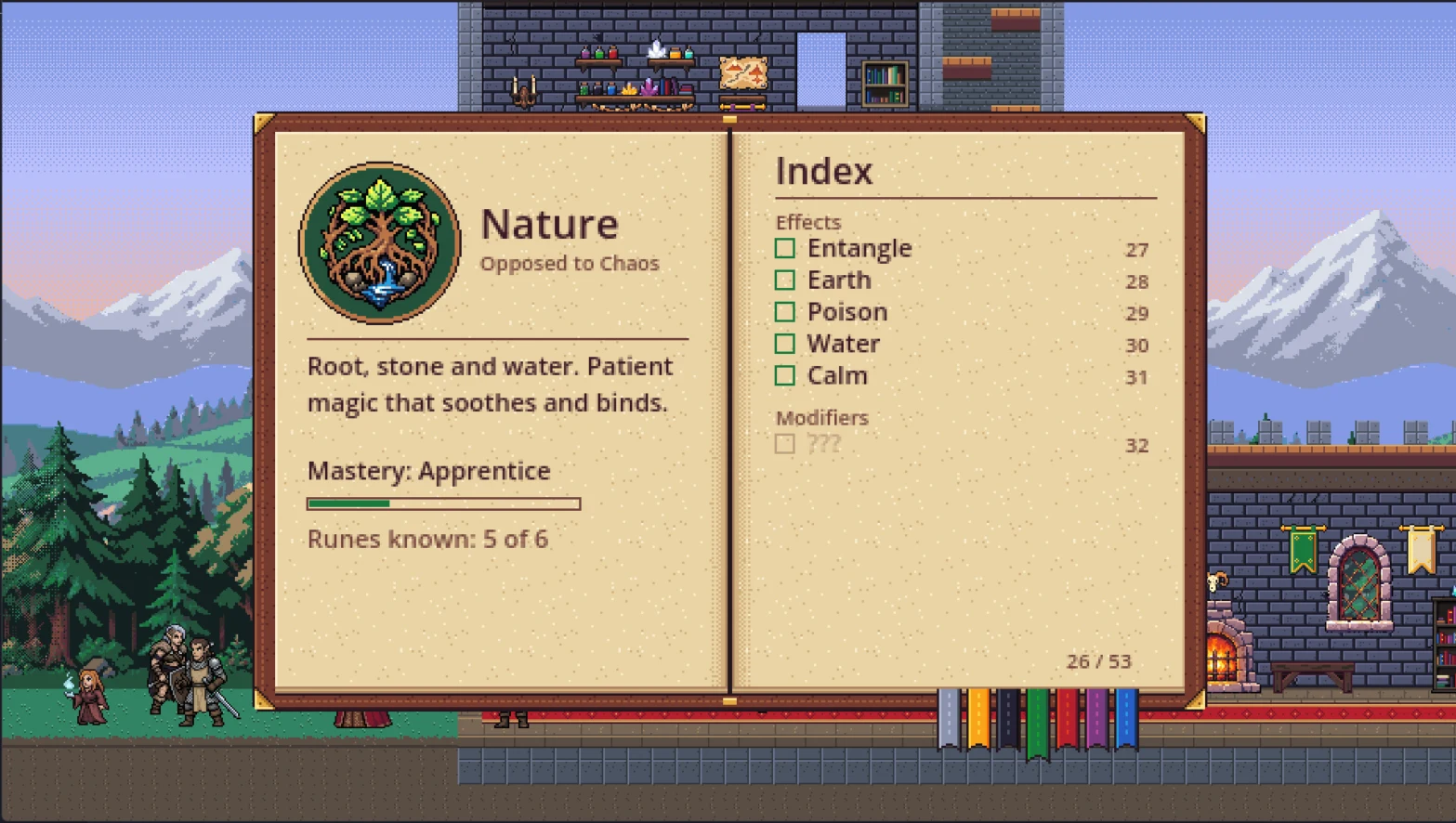
The game revolves around a rune-based spellcrafting system. Instead of choosing spells from a list, players combine magical effects. Life magic, Death magic, elemental effects, opposing schools, unusual combinations, and potentially some spectacular failures.
Each school has its own page in the spellbook, with the runes you've learned so far:
How it's made
My role is designer and "provider of taste". I decide what looks right, and a different AI tool handles each kind of asset. A lot of the art is actually drawn by scripts: small programs that generate an image instead of me painting it. So when something needs to change, I tweak the script and rerun it instead of redrawing everything. Sometimes I still fix pixels by hand or clean up an animation. And everything we decide goes into a shared design doc, so nobody, human or AI, has to remember it all.
Here's one of the wizards walking, nine frames on a loop:
And sometimes I accidentally create Gandalf while designing a wizard. 🧙
This is also where I learned to color swap pixel art through color channels. Every customer is drawn with magenta clothes and green hair. Nobody in the game actually looks like that: the two loud colors are markers, so the game knows exactly which pixels are clothes and which are hair, and repaints them in any color it wants.
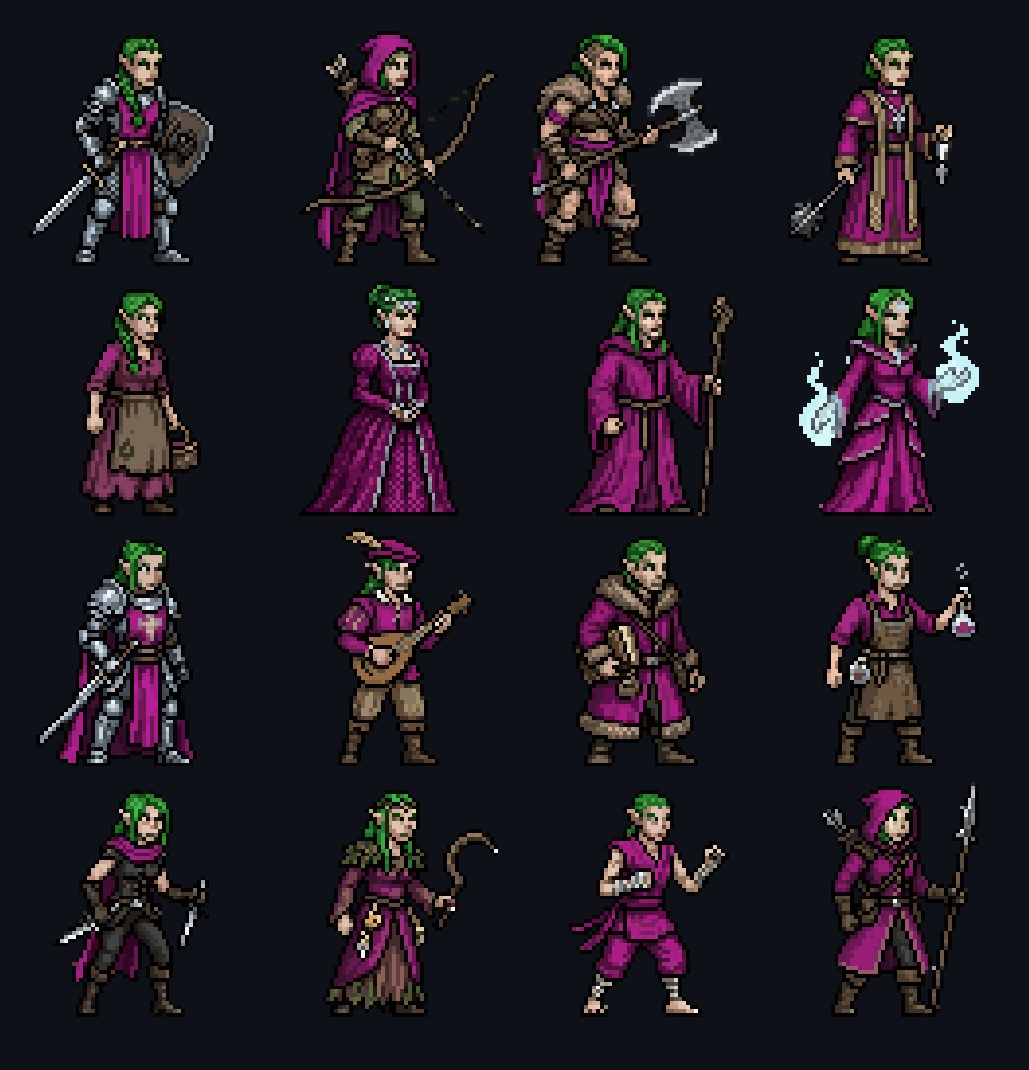
With 114 base sprites like these, 10 clothing colors and 9 hair colors, that's over 10,000 different-looking visitors from art made only once.
Plenty went wrong along the way:
- The first characters came out chibi: cute, big-headed and cartoony. Not the tone I wanted for a wizard tower.
- Mixed pixel sizes. Art from different tools used different pixel scales, so a chair could look sharper than the wizard sitting on it. In pixel art, that's like mixing fonts in one sentence.
- Background removal. Generated images come on a solid background color that has to be cut out, like a green screen. Get it slightly wrong and you get colored fringes around everything. Cutting the spell emblems out of their dark backgrounds was especially fiddly.
- An AI overwrote one of my hand-painted emblems. Now hand-made work stays where the tools can't touch it.
- Plumbing. The boring part: tools that didn't talk properly to the game editor.
- Licenses. Checking that every asset and tool we use is actually allowed in a game.
- And a few 5 a.m. nights. That one's on me. 🤣
But a lot went well too. Changes became quick reruns, the floors finally have depth, and it turns out I'm pretty good at spotting bugs just by looking at the screen.
Do I know exactly how the finished game is going to play?
Not yet.
Have I spent a ridiculous amount of time thinking about magical runes?
Absolutely.
And the tower still needs a spiral staircase. Which, I would argue, is a perfectly legitimate engineering priority.
Oh, and Sellbert
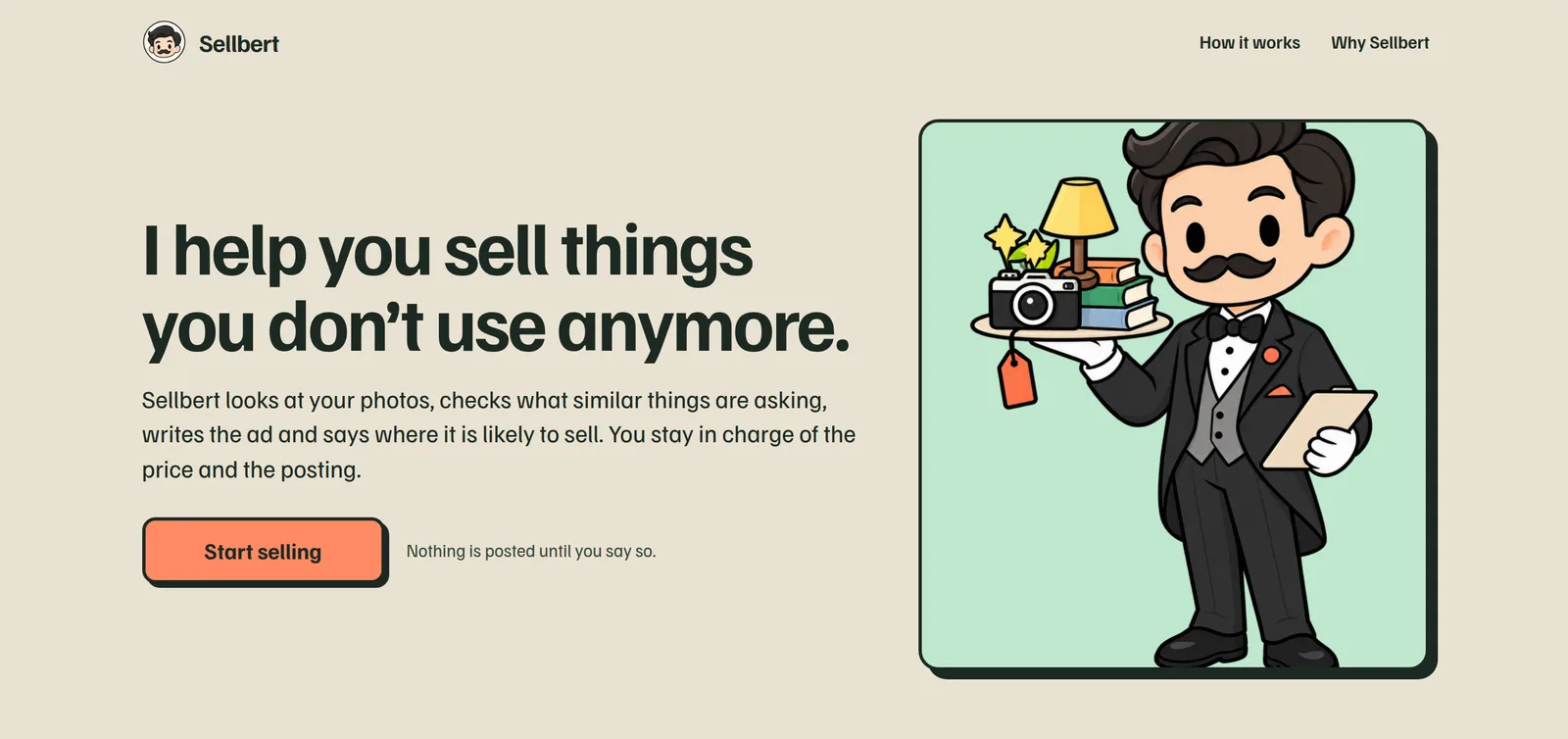
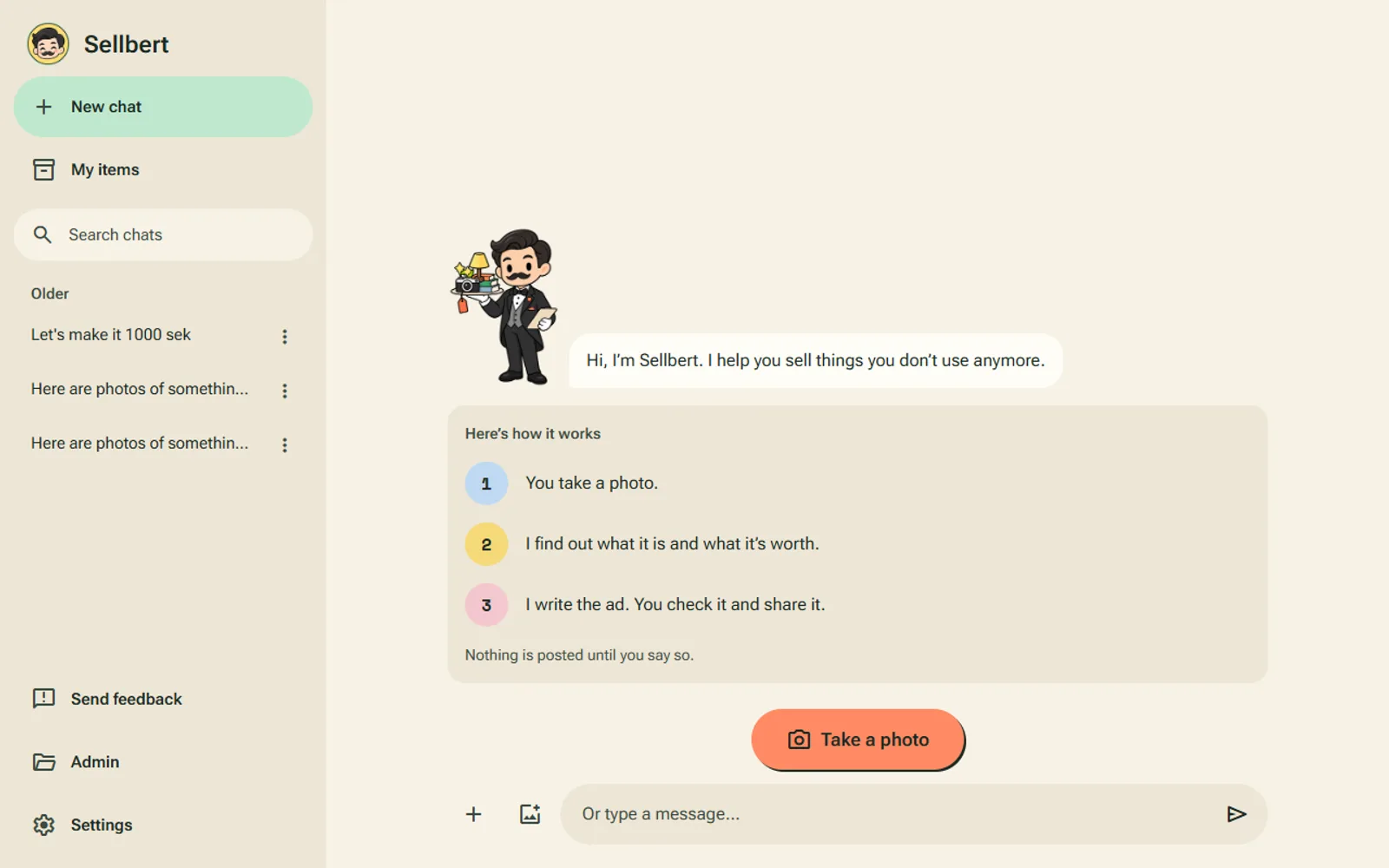
In between all that, I also started building Sellbert, my second-hand selling assistant. 🤵
Honestly, I really don't like putting up ads to sell stuff. Taking photos, checking prices, writing the ad... I thought I could make it easier, and I know I'm not the only one with this problem.
The idea is simple:
- You take a few photos of something you don't use anymore.
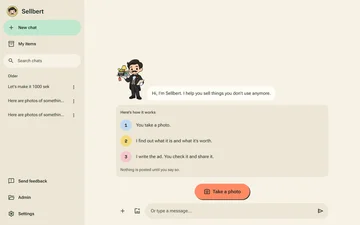
- Sellbert works out what it is, searches publicly available sites for similar ads, and shows you the asking prices it found, with links, and how sure it is.
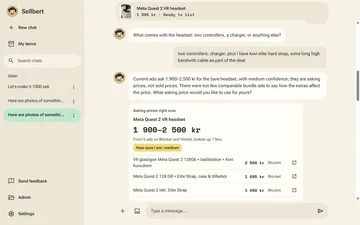
- It writes the ad in English and Swedish and suggests where to sell it. Nothing is posted until you say so.
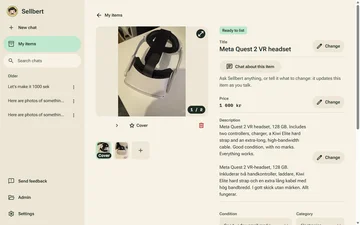
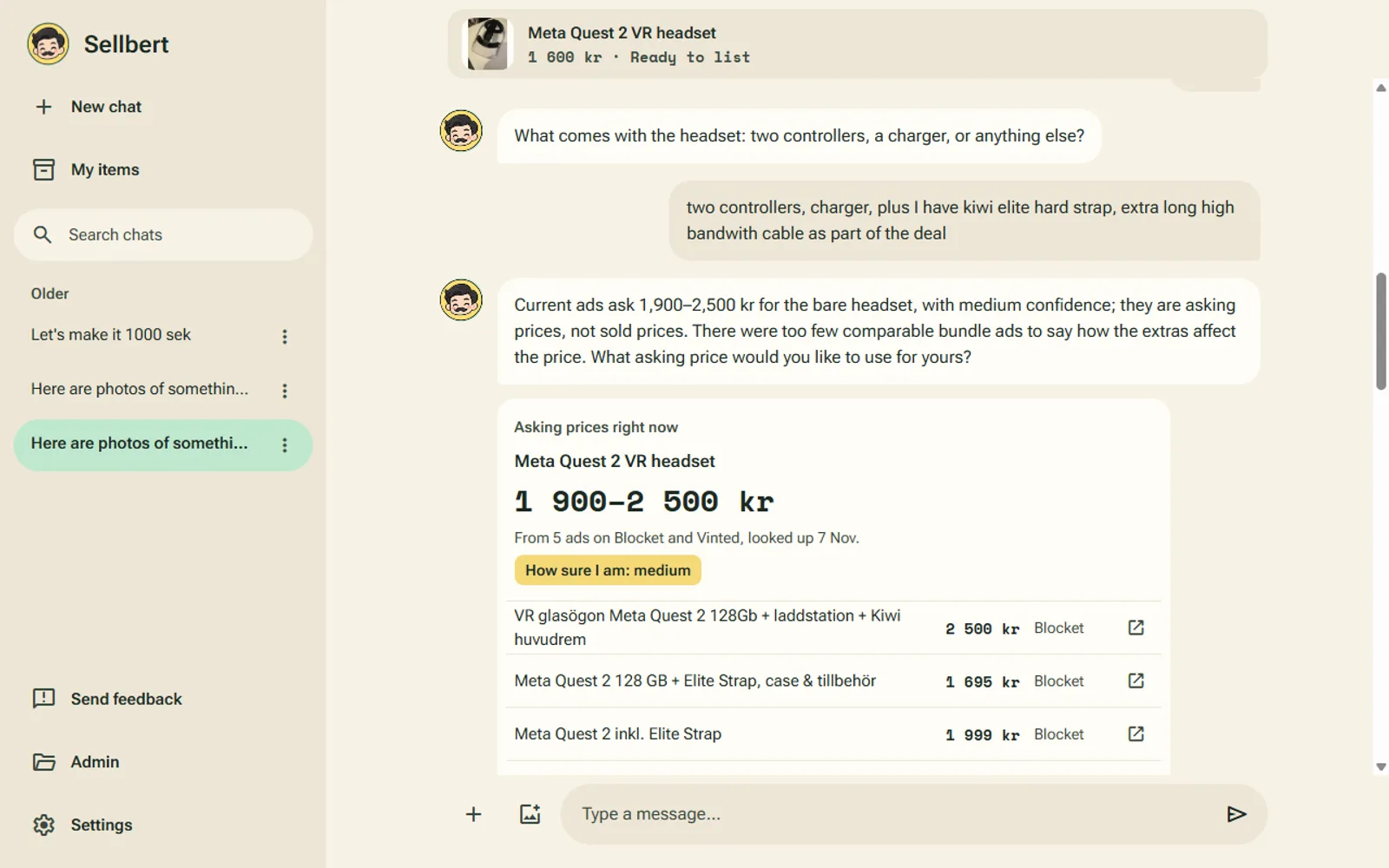
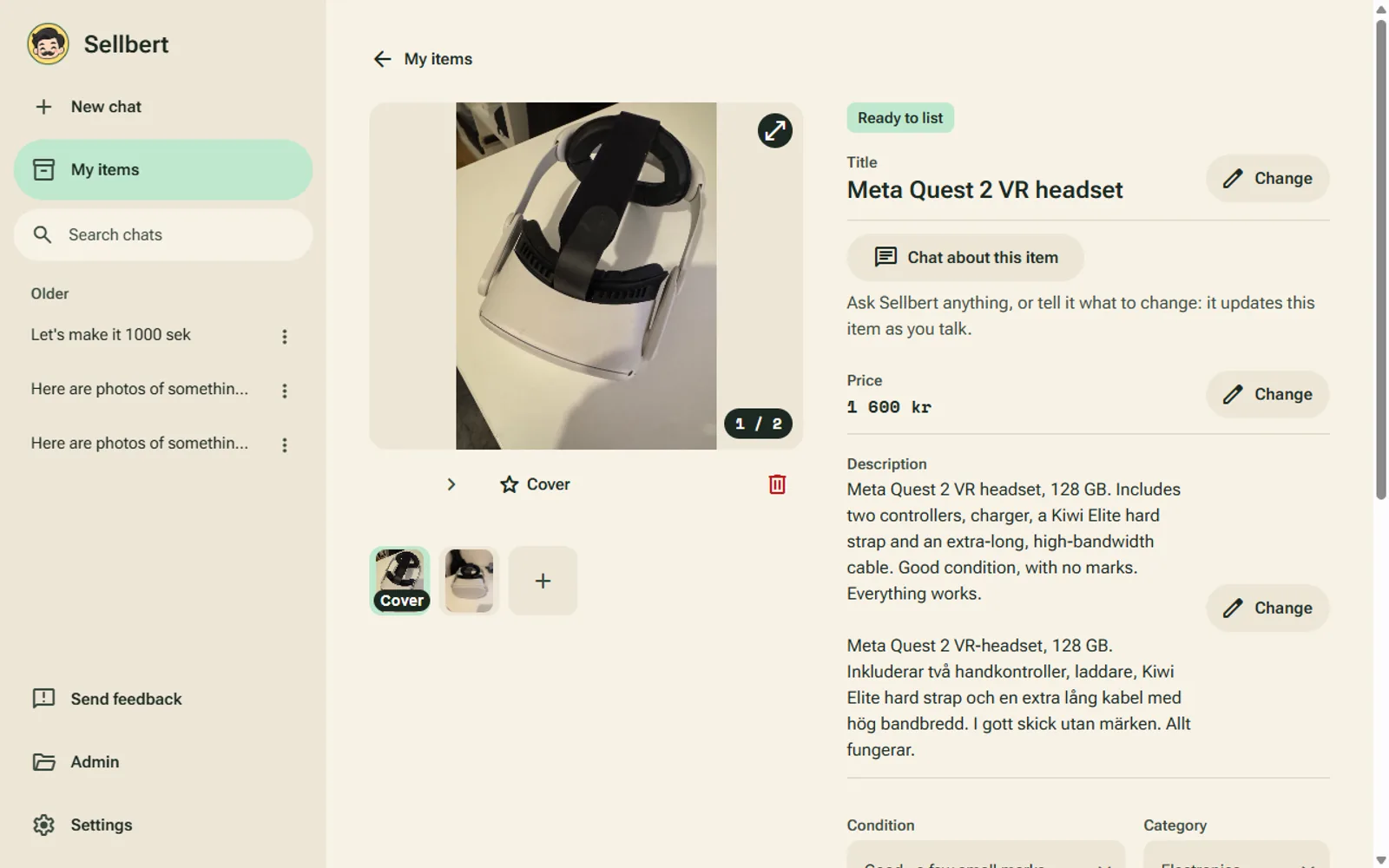
My old Meta Quest 2 is now ready to list for 1,600 kr. 😄
Sellbert is in a closed alpha for now, invite only. It doesn't post the ads for you yet, and I want to test everything carefully first.
I can already imagine bigger features: keeping an eye on prices and trends on its own, telling me to repair something before selling it, maybe even finding me a repair service. Just imagining for now.
Will it become a product? Maybe. It might also get shelved. It's not a startup, it's a hobby project, and that's fine.
And yes, I've also been back in Ultima Online for the first time in 25 years. That one deserves its own post. 🐎
It's Fun to Not Know Everything
The markets will do whatever markets do. There will be more AI models, more controversy, and undoubtedly more critical CVEs. I'll keep reading about all of it over coffee.
Then I'll get back to my little projects.
My wizard tower still needs a spiral staircase. And somewhere in an imaginary asteroid colony, I'm still deciding how big a square should be.
The world will keep being chaotic. There's still plenty of joy in figuring things out.
Footnotes
-
NPR on Democrats winning control of both the House and the Senate, November 3, 2026. ↩
-
Malay Mail on tech billionaires who backed Trump bracing for Democratic subpoenas, November 6, 2026. ↩
-
AP on the November 5 tech selloff. The Nasdaq Composite fell 5.5% that day, ending 11.9% below its October record. ↩
-
Anthropic on pricing its initial public offering, November 18, 2026. Trading began on Nasdaq the next day under the ticker ANT. ↩
-
Google, "Introducing Gemini 4 Neon", November 18, 2026. ↩
-
Anthropic, "Claude Fable 5.2 and Mythos 5.2", November 9, 2026. ↩
-
OpenAI, "Introducing GPT-6.2 Astra and Sol", November 17, 2026. ↩
-
Decrypt, "'It Speaks in Tongues That Only 6.2 Astra Understands': Why Early Testers Hate OpenAI's New Model", November 18, 2026. ↩
-
watchTowr Labs on PHP2Shell. Two unauthenticated remote code execution flaws in PHP, CVE-2026-109618 and CVE-2026-109619, fixed on October 21, 2026 in PHP 8.5.12, 8.4.27, 8.3.36 and 8.2.35. ↩
-
Check Point security advisory on active PHP2Shell exploitation, November 2026. ↩
-
NVIDIA, "NVIDIA Announces CEO Transition", filed with the SEC on November 12, 2026. Colette Kress became interim CEO. ↩
-
NBC News on Huang's resignation. Huang acknowledged being unfaithful. The espionage claims come from anonymous sources, remain unproven, and China has denied them. ↩
-
NVIDIA 8-K on Huang's reinstatement, November 23, 2026, and TechCrunch, "Nvidia reverses course and brings Jensen Huang back as CEO". Colette Kress returned to her role as CFO. ↩
-
CNBC, "Tech stocks rally after Nvidia board approves Jensen Huang's return as CEO", November 23, 2026. The Nasdaq had fallen about 10% the week before. ↩
-
Take-Two Interactive, "Grand Theft Auto VI Shatters Entertainment Box Office Records", November 20, 2026. A company estimate of worldwide retail sales through the end of November 19. ↩
-
Newsweek on the estimated productivity cost of GTA VI, citing economist José García Montalvo. ↩